

From Leads to Retainers: The Evolution of PI Marketing
For years, PI firms treated leads like the main measure of marketing success. (And most still do.) You know the drill: more inquiries meant more opportunity. And if growth slowed, the answer was simple: buy more leads, move faster, and push intake harder.
But that model is getting harder to sustain. Search behavior, advertising costs, and client expectations have all changed. And intake teams are now expected to respond quickly, qualify accurately, and keep momentum with prospects who may already be hearing from multiple firms.
The issue isn’t that leads don’t matter; It’s that leads alone don’t tell the full story. A higher volume of names in the funnel can still leave a firm with more missed calls, follow-up, staff strain, and yet fewer signed cases than expected.
That’s why PI marketing is evolving from a lead-volume conversation to a retained-client conversation. The firms asking better questions aren’t just looking at how many inquiries came in. They’re looking at how reliably their marketing investment turns into signed clients.
How Lead Volume Became a Stand-In for Growth
The thinking behind lead-driven marketing was pretty straightforward: every lead was a potential client, so more leads should mean more business. Providers delivered a steady stream of consumer inquiries at a manageable cost, and the firm’s intake team took it from there. It gave firms a pipeline they could see, count, and compare. Cost per lead became the go-to metric because it answered the most immediate question: How much did we spend to make the phone ring?
But that equation only works when everything after delivery stays relatively constant.
That’s where the old assumption begins to break down. A full intake queue may look like growth, but activity and growth aren’t the same thing.
The Legacy Model Has Become Harder to Scale
The shared-lead model doesn’t just deliver an inquiry. It delivers an inquiry that may have been sent to several firms at once. That distinction matters because the firm isn’t beginning with the consumer’s undivided attention. It’s entering a competition.
Several intake teams may be calling, texting, and emailing the same person within a short window. Making first contact helps, but speed alone isn’t enough. The person who has just been injured in a motor vehicle accident may be dealing with medical care, vehicle repairs, missed work, insurance calls, and a great deal of uncertainty. They’re not simply waiting to see which firm calls first. They’re deciding who sounds prepared, credible, helpful, and human.
Emphasis on the “human.” The expectations around that first contact has changed. The modernization of legal intake is more than a tech upgrade. It’s a cultural shift driven by clients who increasingly expect immediacy, convenience, and efficiency without losing that human connection.
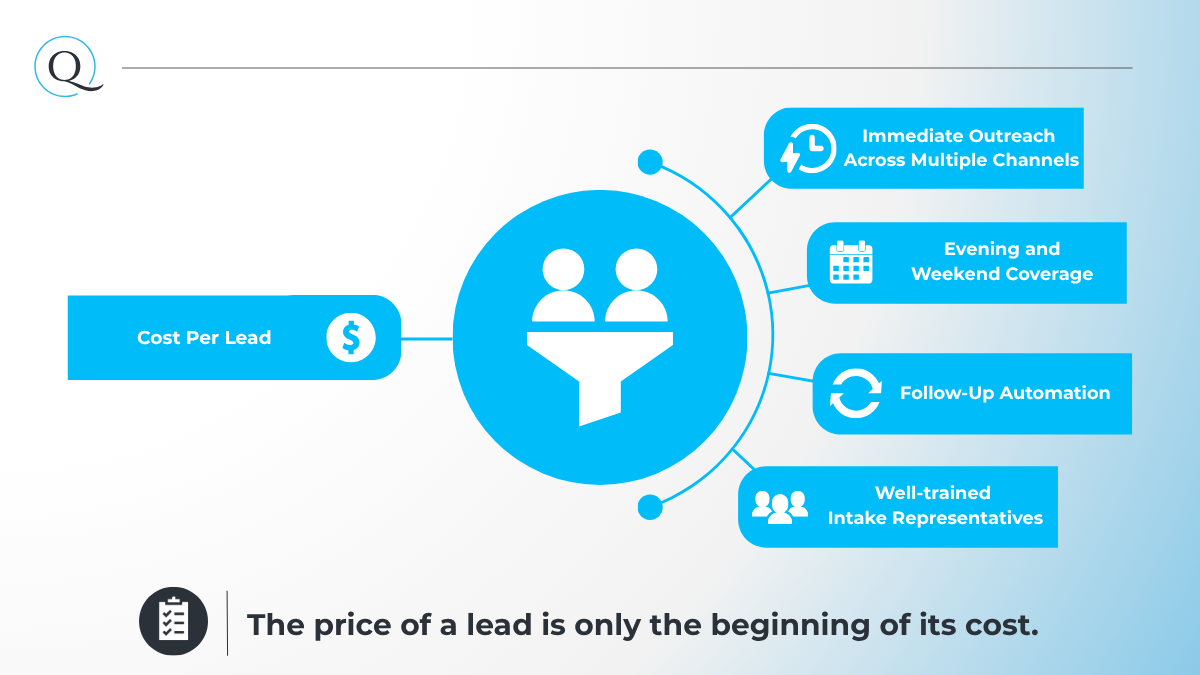
That raises the standard for firms relying on a legacy acquisition model. Competing effectively may require immediate outreach, evening and weekend coverage, multiple contact channels, well-trained representatives, follow-up automation, quality assurance, and enough staff to keep all of it running when volume spikes.
The price of a lead is only the beginning of its cost.
More Leads Can Magnify an Intake Problem
When results dip, buying more leads can feel like the natural solution. Sometimes it is. But more volume won’t solve a weak handoff, slow response times, inconsistent screening, limited after-hours coverage, or a follow-up process that depends too heavily on individual staff members remembering what to do next. It magnifies those problems.
More names enter the system. More calls need to be placed. More texts and emails need to be sent. More records need to be reviewed. More staff time is spent trying to connect with people who may already have retained another firm.
The intake team stays busy, but the number of retained clients doesn’t necessarily move with it.
Attorney at Work looked at $3.3 million in paid-search spending across plaintiff-side firms. In one channel comparison, the source generating fewer leads at a higher cost per lead still produced slightly more signed outcomes — and did so at a lower overall acquisition cost.
Judged by lead volume alone, it looked like the weaker channel. Judged by the result the firm actually wanted, it was the stronger investment. That’s the misconception firms are beginning to move past: the idea that a cheaper or more abundant lead automatically creates more efficient growth.
Why MVA Marketing Is Moving Further Down the Funnel
The evolution from leads to exclusive signed retainers isn’t simply about replacing one product with another. It reflects a larger change in what firms expect their marketing partners to deliver.
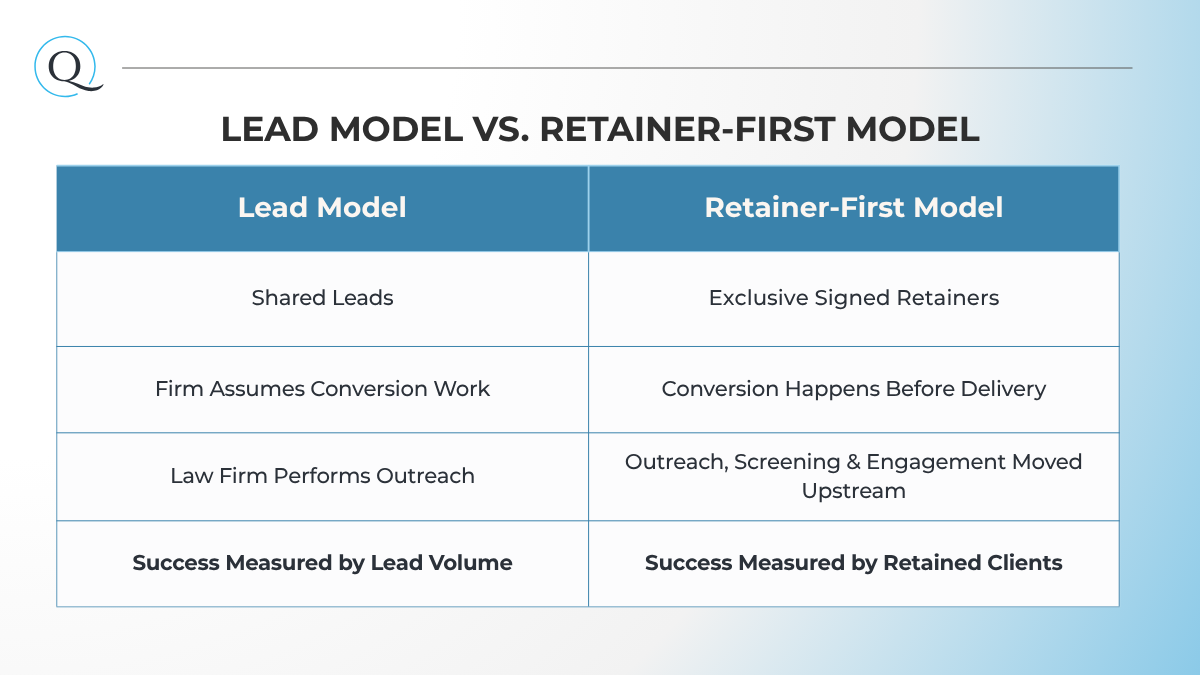
In the legacy model, the provider generates interest, and the firm assumes nearly all the conversion work.
In a retainer-first model, more of that work happens before delivery. Outreach, information gathering, criteria screening, follow-up, and engagement are moved upstream, allowing the firm to enter the relationship at a later and more valuable point.
Basically, a name and phone number are a possibility. A signed MVA retainer is much closer to what the firm was trying to produce in the first place. That difference can address several pressures facing growing PI firms.
Growth Becomes Tied to an Outcome
When a firm buys leads, it’s paying for entry into the acquisition process. When it receives an exclusive signed retainer, it’s entering closer to the outcome against which marketing performance will eventually be judged.
That creates better alignment between the firm’s spending and its growth goals.
Instead of asking whether a campaign generated enough inquiries, leadership can evaluate cost per retained client, acceptance rates, early attrition, and performance by source or market. Those measures provide a clearer picture of what the investment is contributing to the business.
Intake Capacity Can Be Used Differently
A retainer-first approach doesn’t make the firm’s intake team irrelevant. It changes where that team begins.
Instead of devoting as much of its time to repeated early-stage outreach, staff can concentrate on confirming fit, welcoming the client, setting expectations, collecting any additional information, and preparing the matter for attorney review.
Expansion Becomes Easier to Forecast
Entering a new market through a traditional volume-driven model can require several investments at once: advertising, lead purchasing, staffing, technology, training, and extended intake coverage.
And even after those investments are made, leadership may not know how many retained clients the activity will produce.
A signed-retainer model can reduce some of that distance between spending and engagement. That can give owners and operators a firmer basis for forecasting staffing needs, evaluating markets, setting budgets, and determining how quickly the firm can expand without overwhelming its internal systems. It doesn’t remove uncertainty from growth. But it can make growth less dependent on how efficiently the firm can process a rising number of raw inquiries.
The Client Experience Starts on Better Footing
The first conversation with a prospective client isn’t just an intake step. It’s the beginning of the client experience.
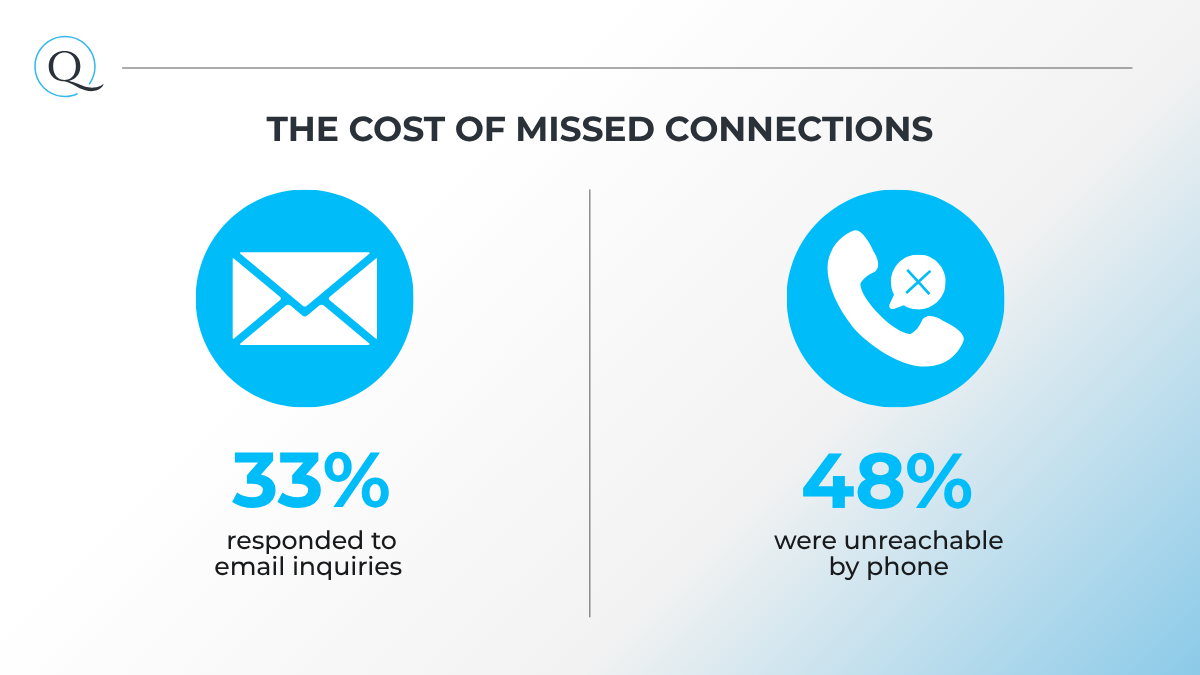
Clio’s 2024 secret-shop study of 500 law firms found that only 33% responded to email inquiries and 48% were effectively unreachable by phone. Even when firms did respond, many failed to provide clear next steps or useful information.
That gap matters even more in MVA marketing, where the person reaching out may be stressed, injured, confused, or unsure what happens next.
Moving more of the engagement process upstream can create a more deliberate first experience, but only when the provider treats it as a human interaction rather than a transaction. People should understand who they’re speaking with, why they’re being contacted, what they’re agreeing to, and what will happen after the retainer is signed.
The Evolution Isn’t Necessarily All or Nothing
This shift doesn’t mean shared leads will suddenly disappear or that every firm should abandon them.
A strong intake operation may continue to produce excellent results from legacy lead sources. Some firms may use shared leads in established markets and signed retainers when entering new ones. Others may use a mix of marketing channels based on practice area, staffing, geography, and growth goals.
The larger evolution is in how those channels are evaluated. The question is no longer simply, “How many leads did we receive?” It’s:
- How many became retained clients?
- What did each retained client truly cost?
- How much internal work did the process require?
- Could the same performance be maintained at greater volume?
- Did the experience build trust with the person seeking help?
- Can leadership forecast what will happen if spending increases?
That’s a much higher standard than cost per lead. It’s also a more useful one.
Signed Retainers Still Require a Strong Handoff
Receiving a signed agreement doesn’t mean the work is finished. Someone still has to own the handoff — and remember that there’s a real, often stressed and possibly injured person on the other end of it.
A delayed first call, confusing communication, or disorganized review process can undermine the relationship just as it’s beginning.
Firms adopting a retainer-first approach should establish clear expectations around who makes the first firm contact, how quickly it happens, what information needs to be confirmed, and what happens when an opportunity requires closer review.
Performance measures should include:
- Acceptance rates
- Speed to first firm contact
- Early attrition
- Results by source and market
- Documentation quality
- Cost per retained client
Your provider deserves the same level of scrutiny. How are consumers finding the provider? What criteria are used during screening? Who conducts the conversations? How is the agreement explained? What happens between signature and delivery? What support is available if the firm has difficulty reaching the client after the handoff?
Moving further down the funnel creates value only when the work happening upstream is thoughtful, consistent, and transparent.
Beyond Lead Volume: Where Quintessa Fits
Quintessa helps PI firms manage the path from inbound consumer interest to an exclusive signed MVA retainer.
Quintessa’s intake team handles the early legwork. We reach out, learn what happened, and make sure each opportunity matches your firm’s criteria before delivering a signed retainer. From there, the handoff can happen through a live transfer or directly within the systems your team already uses. We also provide seven days of follow-up support after your firm makes first contact.
The goal isn’t to get between your firm and the client. It’s to help that relationship start with more of the groundwork already done. So here are the questions you should be asking yourself:
- Are we trying to increase inquiries or retained-client volume?
- Can we calculate our full cost per retained client by source?
- How much staff time goes toward outreach that never results in contact?
- Can our intake team absorb more volume without weakening the client experience?
- Are intake limitations affecting our ability to enter new markets?
- Can we forecast the results of additional marketing spending with confidence?
- Which parts of the acquisition process truly need to happen inside our firm?
The answers reveal more than whether a particular marketing source is performing. They reveal whether the firm’s growth model still fits the market in which it’s operating.
The Next Stage of PI Marketing
For a while, PI marketing was measured by how well it filled the top of the funnel. But now, firms need to understand more than how many inquiries came in. They need to know what happened next, how much effort it took to move the prospect forward, and whether that demand turned into a signed client.
That’s the real shift from leads to retainers. It’s not about replacing lead generation, but measuring marketing by the outcomes that actually drive growth.
Predictable growth comes from building an acquisition model that can consistently move qualified prospects from interest to signed representation without overloading intake, inflating costs, or losing momentum.
Quintessa helps PI firms reduce the distance between inbound demand and signed MVA retainers. Get in touch to see whether a retainer-first approach fits your firm’s next stage of growth.