
You’re spending the money. The inquiries are coming in. But the numbers still aren’t where they should be. Whomp whomp.
Calls aren’t turning into consultations, consultations aren’t turning into signed retainers, people who seemed interested suddenly vanish, and sooner or later, someone looks at the results and says what everyone has been thinking: What is wrong with these leads? It’s an understandable conclusion.
You must be thinking that the targeting must be off. The source must be weak. Or maybe the firm needs better traffic, better campaigns, or a different vendor.
Sometimes, that diagnosis is right. But a strong inquiry can also go sideways after it reaches the firm. The response takes too long. The inquiry lands with the wrong person. One team member handles it differently from another. Follow-up is inconsistent, incomplete, or never happens at all.
From the outside, all of those outcomes can look exactly like the same thing: a bad lead.
That’s what makes the problem so frustrating. When firms can’t clearly see what happened between the initial inquiry and the final disposition, acquisition takes the blame for breakdowns that may have happened somewhere else in the process.
Before a firm concludes that it needs better leads, it needs to know what happened to the ones it already had.
Lead Quality Doesn’t Stop at Acquisition
Marketing determines who reaches the firm and under what circumstances. From there, the intake operation takes over.
That distinction matters because “lead quality” can describe several very different problems. Sometimes the source truly is producing poor-fit inquiries. Sometimes viable prospects are getting lost after arrival. And sometimes marketing, intake, and leadership are each using a different definition of what a quality opportunity actually looks like.
From the top, the result can look the same: fewer retained clients than expected. Without visibility into what happened between the first inquiry and the final outcome, leadership is left trying to diagnose the problem from the symptom. That can lead firms to cut productive sources, spend more on acquisition before intake is ready for additional volume, or keep pouring money into channels that generate activity without producing the right outcomes.
The real question is where performance starts to break down.
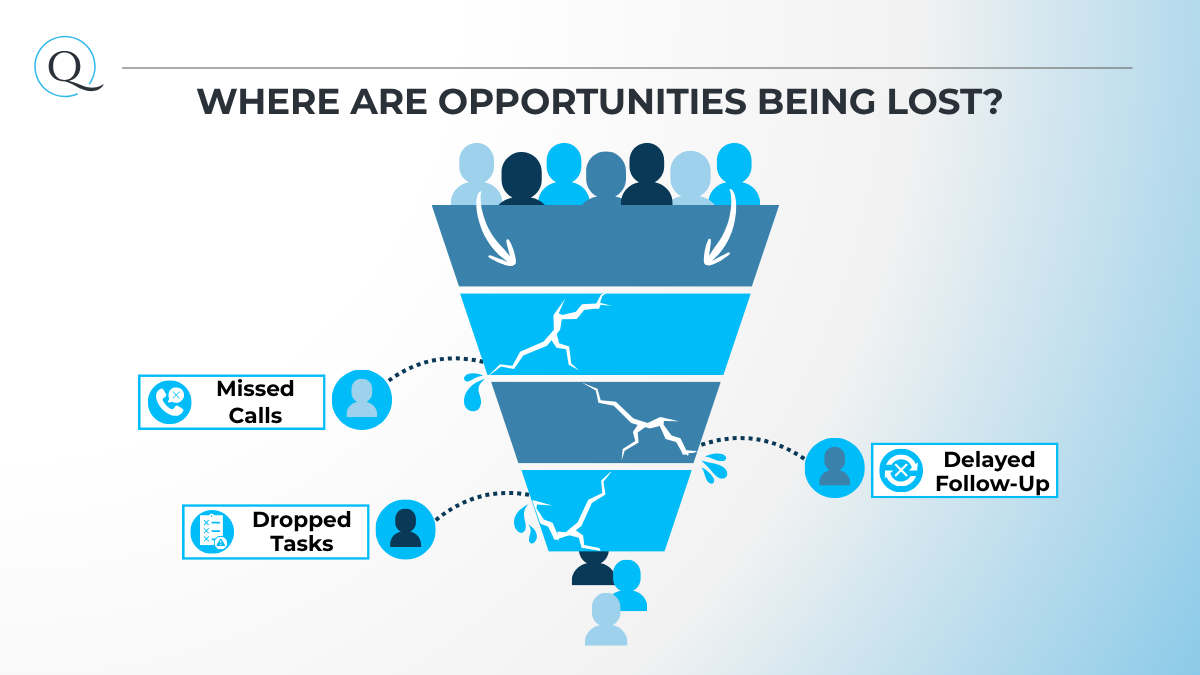
Where Good Opportunities Lose Ground
A prospect doesn’t suddenly become a bad lead because a phone call sat unanswered or a follow-up task slipped through the cracks. But those moments can absolutely affect whether that prospect becomes a retained client.
And they happen in places that don’t always show up in a marketing report.
Marketing Operations: What Are You Actually Optimizing For?
Inquiry volume and cost per lead are useful metrics, but they don’t tell the whole story.
If reporting stops at form fills, calls, or transfers, marketing teams may end up optimizing toward the easiest numbers to measure rather than the outcomes that matter most to the firm. A source generating a high number of inquiries may look terrific until the firm examines how many of those inquiries actually moved forward.
The reverse is also true. A lower-volume channel may look expensive on a surface-level report while consistently producing better-fit prospects and stronger retained-client economics.
Marketing can only improve what it can see. If downstream intake results never make their way back into acquisition decisions, part of the feedback loop is missing.
Intake Operations: Consistency Changes the Data
Similar inquiries don’t always get similar treatment. Timing, staffing, and individual habits can all change what happens next. One prospect may reach an experienced intake specialist right away, while another sits during a busy stretch. Qualification may vary by employee, and follow-up can range from several thoughtful attempts to one voicemail and nothing more.
Those differences matter on their own. They also change the data the firm later uses to judge lead quality.
If execution varies widely, leadership can’t be sure whether disappointing conversion reflects the source or the process. A structured intake operation reduces that uncertainty by creating more consistent handling across employees, shifts, locations, and sources.
Consistency makes performance easier to improve because the firm has a more reliable baseline to work from.
CRM and Data Operations: Can You Trust the Evidence?
Even a disciplined intake team can struggle if the data behind the process is messy.
CRM problems are often less dramatic than they are cumulative. A source might be entered incorrectly, one intake rep may use a different disposition than another, or a follow-up call may happen without ever making it into the record. Sometimes a prospect moves forward, but the original source gets lost somewhere along the way.
Any one of those mistakes may seem minor. Repeated across dozens or hundreds of inquiries, though, they can distort the picture leadership uses when deciding where to spend, what to cut, and what needs attention.
That leaves firms in an odd position: they may have plenty of data without having much confidence in what it means. They can see how many inquiries came in, but have a harder time determining which sources consistently produced strong prospects, why people were disqualified, or where promising inquiries dropped out of the process.
The better the underlying data, the easier it is to make those calls with confidence.
Handoffs Create Their Own Risk
Every transition adds another place where momentum can disappear.
The handoff process looks simple on paper: marketing generates an inquiry, intake makes contact, another team member steps in if needed, and anyone who isn’t ready to sign moves into follow-up. But every transition creates another opportunity for information to get lost, delayed, entered inconsistently, or left without a clear owner. The more people, platforms, and workflows involved, the harder it becomes to see where momentum was lost — and the easier it is for an operational breakdown to look like a “bad lead.”
That sounds basic, but basic processes become increasingly important as volume grows.
When Everyone Means Something Different by “Quality”
Lead-quality conversations can become surprisingly unproductive when departments are working from different definitions.
Marketing may consider an inquiry qualified because it met campaign criteria. Intake may care about eligibility, timing, and fit. Or maybe leadership may look primarily at retained-client economics. All three perspectives contain useful information. The trouble starts when those definitions never get reconciled.
Marketing says a source is performing. Intake says the inquiries are weak. Leadership sees conversion below expectations. Everyone has numbers, but they don’t describe the same thing.
Shared definitions create a common scorecard. They allow the firm to trace performance across the entire path from acquisition through intake and, ultimately, retention. That makes it much easier to identify whether a source needs to change, a process needs attention, or the firm simply needs better alignment between teams.
Build an Operation That Can Handle What Marketing Sends It
Better lead performance usually comes from several operational disciplines working together.
Marketing, intake, and leadership need shared qualification criteria so a “qualified” opportunity means roughly the same thing across teams. Every inquiry needs clear ownership, particularly when it moves between people or systems. Response and follow-up expectations should be defined rather than left entirely to individual habits.
Outcome data also needs to travel back upstream. Marketing should be able to see which sources produce more than activity at the top of the funnel. Intake results, qualification patterns, and retained-client outcomes all belong in the conversation.
Capacity deserves just as much attention as lead volume. If intake is already stretched, spending more to bring in additional inquiries can create a new set of problems. Every increase in volume adds calls to return, follow-up to manage, records to maintain, and more opportunities for something to get missed during a handoff. Before a firm turns up acquisition spend, it should have a realistic sense of what the intake team can handle without sacrificing consistency.
Marketing and intake also need to stay in regular conversation because the conditions around them don’t stay put. Staffing shifts, campaigns evolve, source performance changes, and competitors adjust their strategies. If those teams only start comparing notes once the numbers have already slipped, they’re diagnosing the problem after it has had time to grow.
Better Operations Work Best With Better Inputs
Even excellent intake operations have limits. A firm receiving large numbers of poor-fit inquiries will still spend time screening, routing, and documenting them. That workload eats up capacity that could be used on better-fitting prospects that might convert.
The best growth model improves both ends of the process: the quality of the demand entering the firm and the firm’s ability to handle that demand well once it arrives.
That’s where Quintessa can play a useful role.
Quintessa helps personal injury firms connect with qualified, intake-ready prospects, reducing some of the noise that internal teams would otherwise have to sort through themselves. Its signed-retainer model moves that process even further downstream by delivering retained clients rather than simply adding more raw inquiry volume to the top of the funnel.
For a firm with disciplined intake operations, stronger inputs make those systems more productive. For a firm still working through operational gaps, cleaner demand can also make those gaps easier to see.
Either way, the goal is the same: a clearer path from acquisition to retained client.
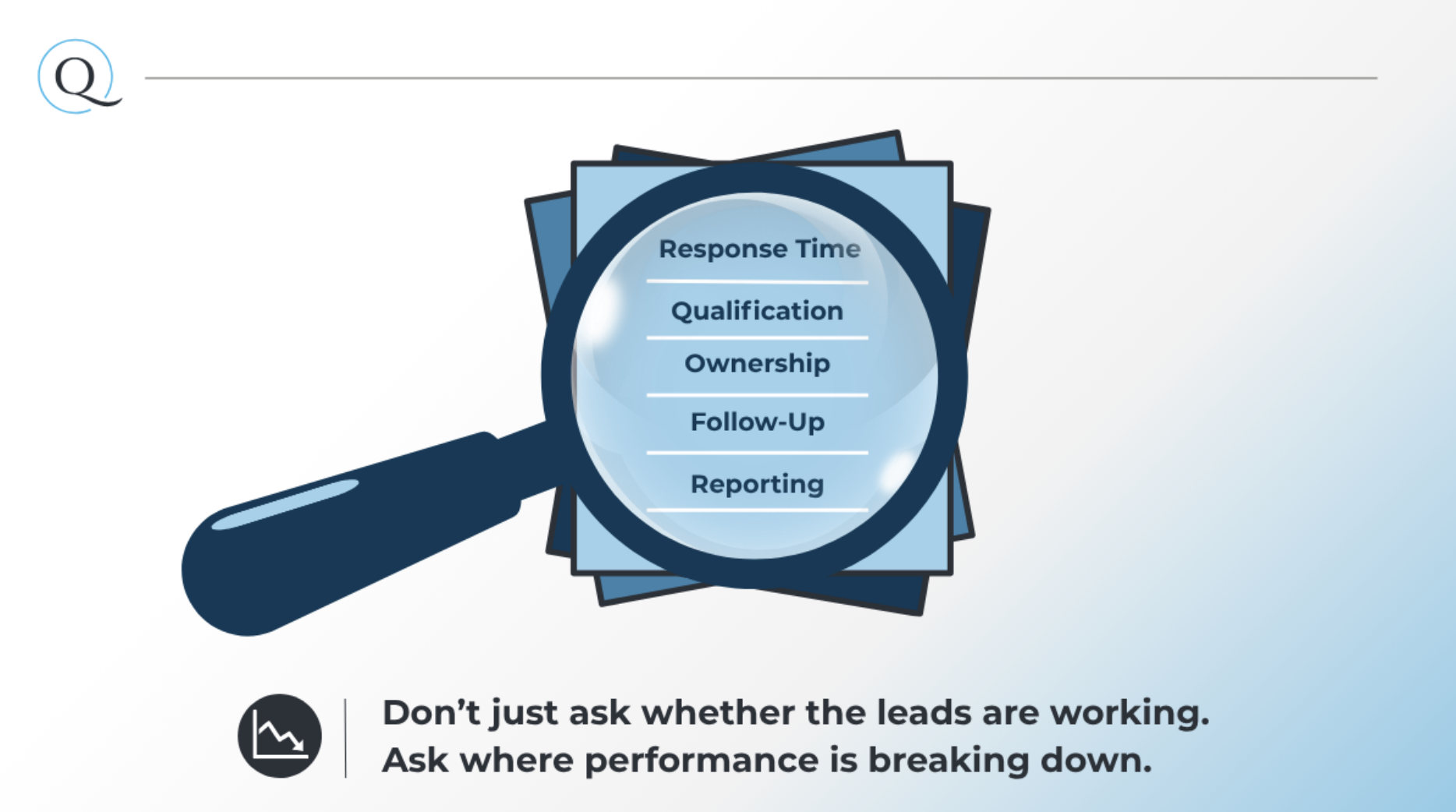
Know Where the Problem Actually Lives
When lead performance slips, the answer may ultimately involve a new source, a different campaign, or a change in marketing spend. But those decisions are much easier to make when the firm can trace what happened after an inquiry arrived.
- How quickly did someone respond?
- Was the prospect qualified consistently?
- Did the right person own the next step?
- Was follow-up completed?
- Did the final outcome make its way back into the data used to evaluate the source?
A firm that can answer those questions has something far more useful than a general impression that its leads are good or bad. It has a system for diagnosing performance. And that becomes increasingly important as the firm grows. More marketing can create more opportunities, but it also puts more pressure on every process that comes after it.
The firms that scale well know both sides of the equation: what they’re bringing in and what happens next. See how Quintessa helps PI firms start with stronger opportunities. Get in touch today.