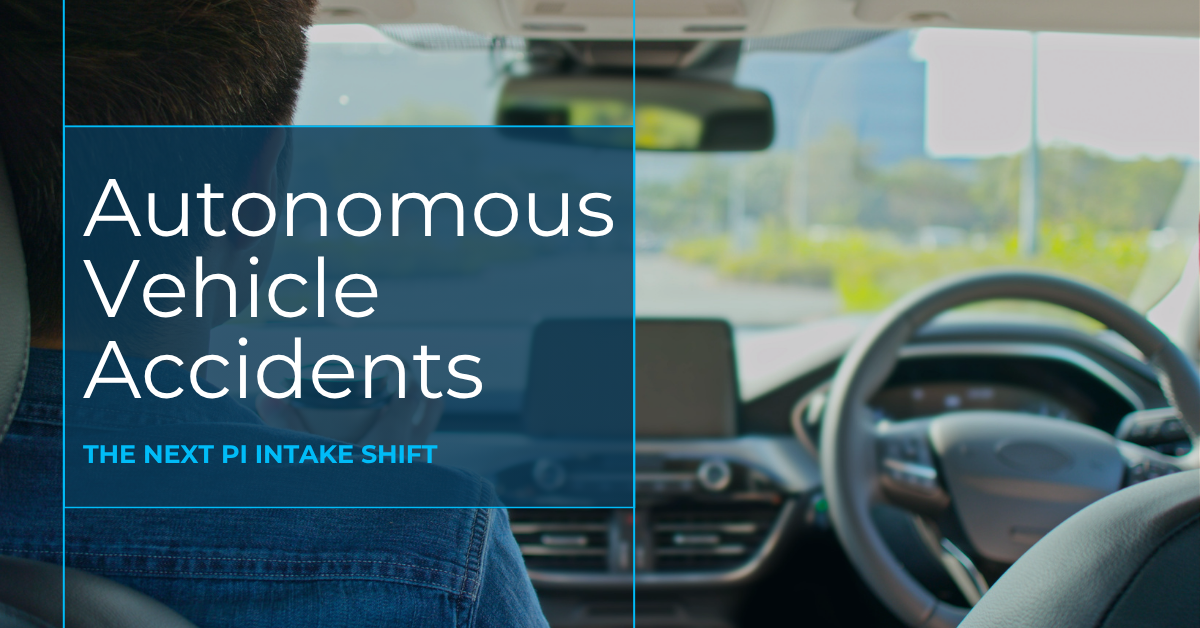
“Who was driving?” used to be the easiest question in MVA intake. Increasingly, the answer may be evolving into, “It depends on what you mean by driving.”
Advanced driver-assistance systems are already common in consumer vehicles, and fully autonomous ride-hailing is operating in a growing number of U.S. cities. After premiering in Phoenix, AZ, in 2017, Waymo opened its Dallas service to the public in August 2026, followed by Houston later that month. In September, the company began welcoming public riders in Denver, San Diego, Tampa, and Las Vegas.
But wait, as the ads say, there’s more. Tesla’s Full Self-Driving (Supervised), for example, can make lane changes, follow navigation routes, navigate around vehicles and objects, and make turns, while still requiring an attentive driver who remains responsible for the vehicle.
For PI firms, that makes vehicle automation an intake issue now. A crash may look like an ordinary MVA while carrying a very different trail of information about the vehicle, its technology, its operator, and what the system was doing immediately before impact. The goal for intake teams is to recognize when automation may be relevant, capture enough information to preserve the thread, and route the inquiry appropriately.
ADAS and Autonomous Driving Aren’t the Same Thing
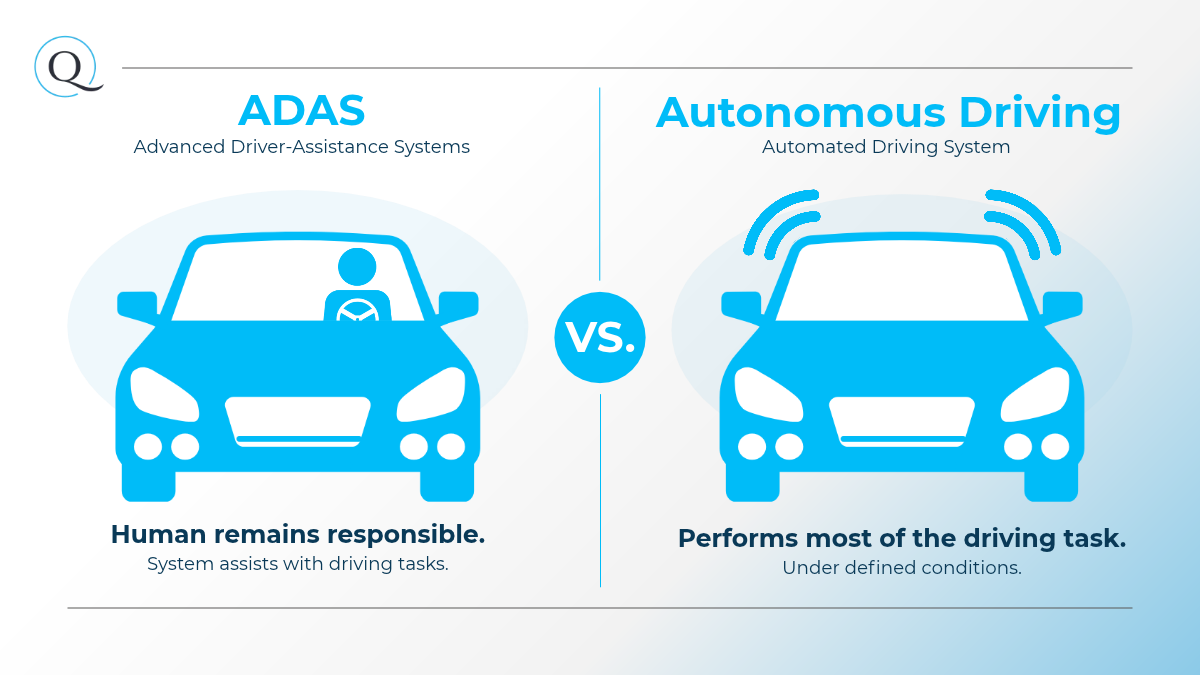
“Self-driving” has become a catch-all phrase for technologies that can play very different roles.
NHTSA distinguishes advanced driver-assistance systems, or ADAS, from automated driving systems, or ADS. At Level 2, for example, a system can continuously assist with steering, acceleration, and braking while the human driver remains responsible for driving and monitoring the road. Tesla’s Full Self-Driving (Supervised) is one mentioned above: despite the name, it requires an attentive driver and is not classified as fully autonomous. Higher levels of automation can perform more of the driving task under defined conditions.
During intake, staff only need enough detail to identify that automated technology may be involved. A caller may say the car was “driving itself,” name a branded feature, or simply say “the car did something weird.” Capture the caller’s words, the vehicle information, and the name of any system or feature they remember. Later review can determine exactly what technology was involved.
Traditional Crash Intake May Not Capture Enough
The standard MVA questions still matter: who was involved, where and when the crash happened, what vehicles were involved, whether anyone was injured, and what happened. Automation simply adds another branch to that familiar process.
Ask whether driver-assistance or automated-driving technology may have been active immediately before or during the crash. A “yes,” “maybe,” or “I don’t know” can trigger a few additional questions without turning the intake call into an engineering deposition.
Commercial robotaxis may involve a fleet operator and an automated driving system rather than a conventional driver. Consumer vehicles may have driver-assistance features that were engaged, disengaged, issuing warnings, or requesting intervention. Catching that extra layer early helps prevent important information from disappearing as the inquiry moves downstream.
What Intake May Need to Capture
Once automation is flagged, firms can add a short set of conditional questions to the existing workflow:
- Who owned the vehicle, and who was inside it?
- Was there a human driver or operator?
- What driver-assistance or automated-driving feature was involved, if known?
- Was the feature active immediately before or during the crash?
- Was the person in the driver’s seat expected to supervise or intervene?
- Did the vehicle issue a warning, request intervention, or disengage?
- Was the vehicle personally owned, rented, or part of a commercial fleet or ride-hailing service?
- Are there photos, video, app screens, messages, trip receipts, or other records from immediately before or after the crash?
Depending on the vehicle and service, additional information may exist in vehicle data, telematics, system logs, fleet records, app records, video, or other sources.
According to NHTSA, event data recorders can capture information such as pre-crash vehicle dynamics, system status, driver inputs, restraint use, and crash data for a brief period around an event. NHTSA also requires certain manufacturers and operators to report qualifying crashes involving ADS and Level 2 ADAS.
The available records will vary by vehicle, system, and service. That variability is exactly why “What kind of car was it?” may no longer capture everything a firm needs to know at intake.
Intake Should Flag Complexity, Not Reconstruct the Crash
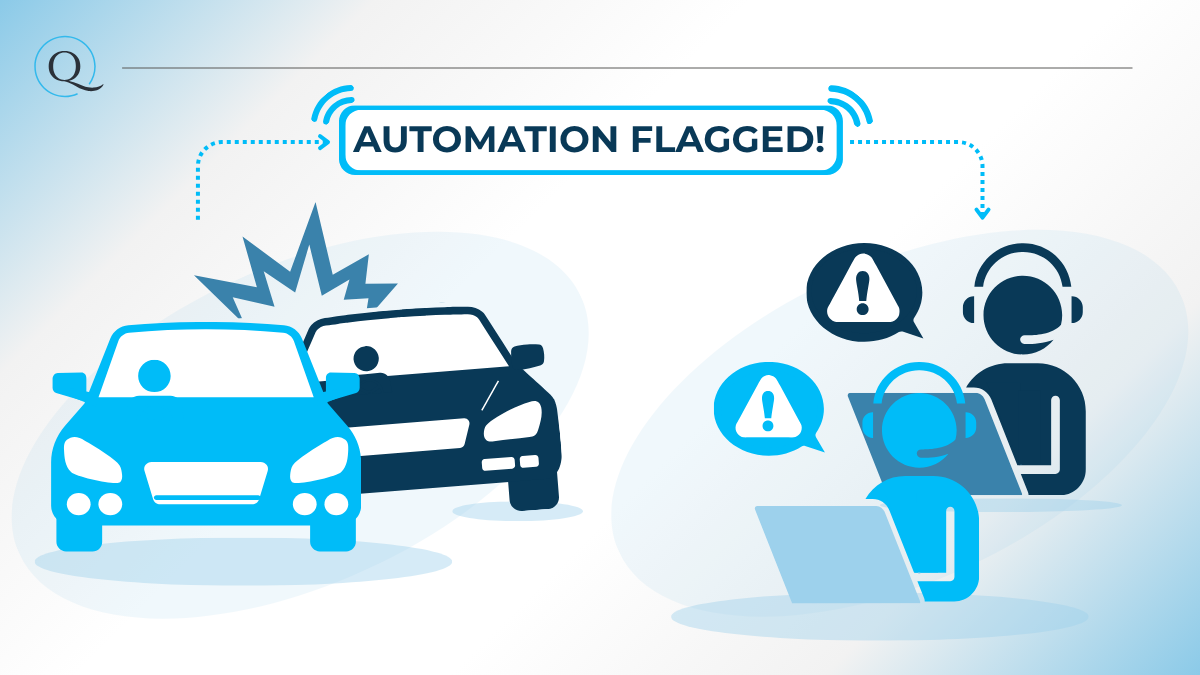
The intake team’s role is recognition and routing. Staff can capture the basic facts, preserve the caller’s description, and flag an automation-related inquiry for the firm’s designated review path without having to understand the engineering or reconstruct what happened.
Intake teams may also need to distinguish between a fully autonomous vehicle and a consumer vehicle using an advanced driver-assistance system. A driver may still be legally responsible for operating the vehicle even when the system was controlling significant parts of the driving task. That makes questions about which system was engaged, what it was doing, and what the driver was expected to supervise especially important.
Early identification gives attorneys a chance to consider whether additional parties, records, or preservation issues may need attention.
The process can be simple: a conditional CRM field that opens a handful of additional questions, a disposition code that flags the inquiry, and an escalation rule identifying who reviews it next. That structure gives intake specialists a clear path when the ordinary script stops being enough.
Prepare Before the First Robotaxi Crash Hits Your Queue
Even firms outside current robotaxi markets have reason to make this change. ADAS-equipped consumer vehicles are already on roads nationwide, while autonomous commercial services continue expanding.
The regulatory environment is moving, too. In July 2026, NHTSA announced work toward the first federal AV performance standards and granted Zoox a temporary exemption permitting commercial deployment of up to 2,500 purpose-built robotaxis annually for two years. Federal safety standards are also being reconsidered for vehicles designed without traditional human-driver controls.
Your PI firm can prepare for that shift with a handful of conditional fields, a trigger question, and a clear escalation path rather than rebuilding its entire intake operation.
That preparation matters because incomplete information at intake can be harder to recover later. As automation introduces new technology, records, operators, and ownership structures into an MVA inquiry, firms need a way to recognize complexity before it disappears into a standard workflow.
Build the Branch Before You Need It
Start with one question: Was any driver-assistance or automated-driving feature active immediately before or during the crash?
If the answer is yes, maybe, or “I don’t know,” branch into the additional questions and route the inquiry for review. The goal is simple: recognize when “Who was driving?” has become more complicated than it used to be and preserve enough information for the firm to evaluate what comes next.
Quintessa helps PI firms build acquisition systems around qualified opportunities rather than raw volume, with intake and routing designed to move valuable prospects further through the funnel. If your firm is ready to strengthen how opportunities are identified, qualified, and routed from the start, talk to Quintessa about building a client acquisition strategy designed for what comes next.