
On paper, your intake process probably looks pretty good. A prospective client reaches out, the right person responds, next steps are clear, and a strong prospect moves toward signing without unnecessary friction. Chefs kiss.
That’s the ideal. But how closely does it match what someone actually experiences?
Secret shopping gives PI firms like yours a way to find out. Someone poses as a prospective client and goes through the same process as a real inquiry, paying attention to what happens along the way. Done well, the exercise can uncover gaps that are difficult to see from inside the firm: confusing contact options, slow responses, awkward handoffs, and so on. It’s a way to audit your processes so qualified leads don’t fall out of your pipeline.
The goal is to see your intake operation from the prospect’s side, where internal workflows, standard operating procedures (SOPs), and CRM statuses are invisible. All the prospect knows is whether getting help feels easy, clear, and reassuring at a moment when they may already be injured, stressed… and maybe even talking to your competitors.
Start Where a Real PI Prospect Starts
Begin before anyone at the firm answers the phone. How do clients find you? Start there.
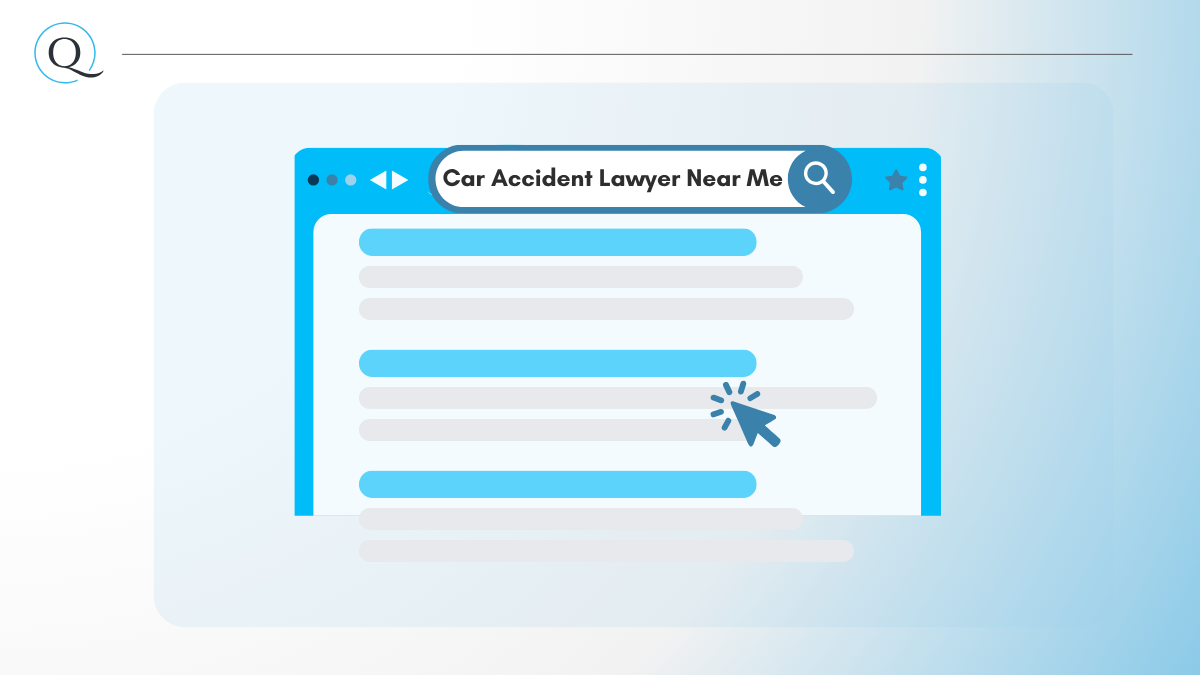
Search for your firm the way a prospective client might, preferably from a phone and without relying on bookmarks or shortcuts you already know.
Someone looking for an attorney after an accident is unlikely to approach your website with the familiarity of an employee. They may be sitting in a doctor’s waiting room, handling an insurance call, or searching between a dozen other things demanding their attention.
As you move through the site, pay attention to the questions a new visitor has to answer for themselves:
- Can you quickly tell whether this firm handles what happened to me?
- Is it obvious how to contact someone?
- Can you easily call, text, complete a form, or schedule from your phone?
- Does the contact form ask for a reasonable amount of information?
- After submitting, do you receive confirmation?
- Are you told when or how someone will contact you?
- Do Chatbots and scheduling integrations move you through the process easily?
These details deserve scrutiny. Clio’s 2024 secret-shopper study contacted 500 law firms and found that only 33% responded to email inquiries, while 48% were effectively unreachable by phone. Even after contact was made, clear information about the process and next steps was often missing.
The American Bar Association also recommends periodically testing law firm websites from the prospective client’s perspective, including mobile navigation, forms, scheduling tools, chat functions, confirmations, and what happens after someone reaches out. A tool can be functioning exactly as designed and still create friction for the person trying to use it.
Do the exercise yourself at least once, but outside perspective can also be useful. Someone who doesn’t work at the firm is much less likely to unconsciously fill in missing information or know which button, menu, or form leads where.
Give Your Secret Shopper a Realistic Scenario
A useful shop needs a plan. Sending someone in with little more than “pretend you need a lawyer” makes it difficult to compare one experience with another or know whether your process handled the inquiry appropriately.
Instead, build a scenario that resembles the kind of prospect your firm actually wants to serve. For example:
The shopper was rear-ended three days ago. They’ve begun receiving medical care; the other driver appears to have insurance; they haven’t hired an attorney; and they want to know whether the firm handles accidents like theirs and what they should do next.
Decide in advance how the shopper will make contact, what information they’ll provide, what questions they’ll ask, and how far through the process they should go. Attorney at Work similarly recommends giving a shopper a defined identity, situation, questions, timing, and plan for ending the interaction so the exercise produces useful observations rather than an improvised conversation.
Your scenario can also test a specific weak point. If your data shows problems with evening inquiries, test after-hours coverage. If consultations are frequently scheduled but missed, follow the process through scheduling and reminders. If handoffs are a concern, let the inquiry travel far enough to experience one.
And consider occasionally testing an inquiry your firm would not accept. How clearly and respectfully does the firm handle someone who isn’t a fit? That interaction still shapes your reputation and may influence referrals later.
Follow the Experience, Not Just the Phone Call
Once the test begins, document what happens from first contact through the agreed stopping point. Record response times, transfers, promised follow-up, repeated questions, and moments when the shopper doesn’t know what to do next.
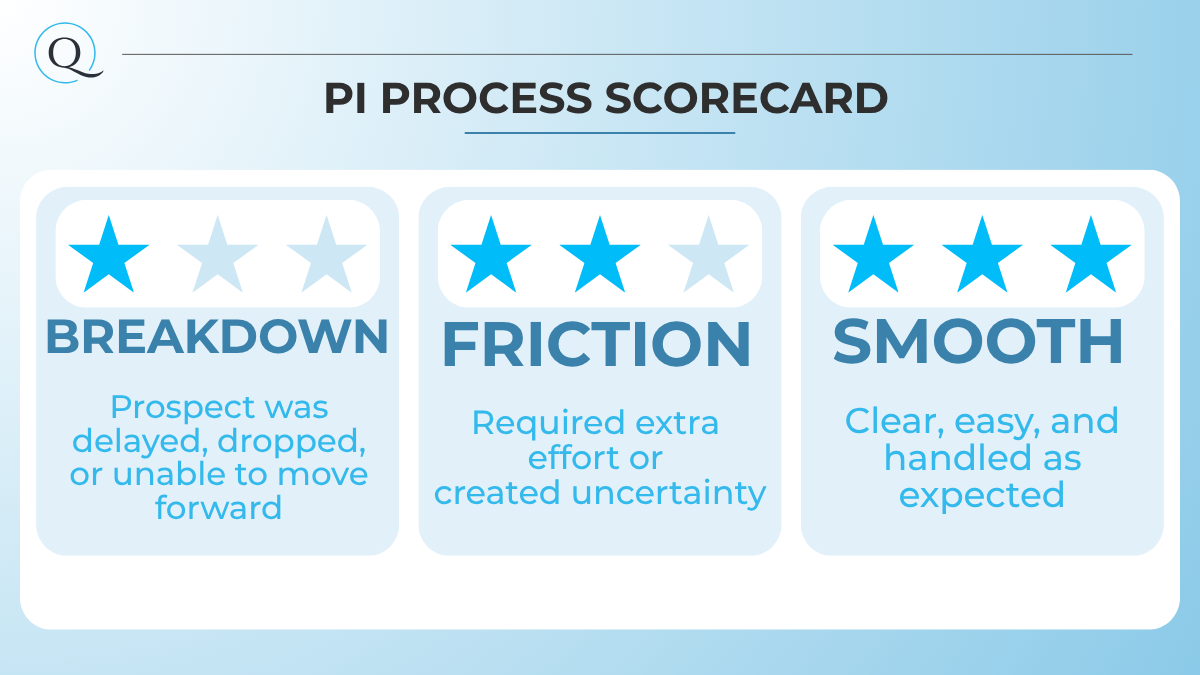
A simple scorecard can keep those observations consistent from one test to another. One approach is to rate each experience:
3 – Smooth: Clear, easy, and handled as expected
2 – Friction: The process worked, but required extra effort or created uncertainty
1 – Breakdown: The prospect was delayed, confused, dropped, or unable to move forward
Then evaluate six areas:
- Access: Was it easy to find and use a working contact method?
- Response: How quickly and reliably did the firm respond?
- Clarity: Did the prospect understand what was happening and what came next?
- Empathy: Did the interaction feel respectful and appropriate for someone dealing with an injury?
- Handoff: If responsibility moved between people or systems, did the transition feel organized?
- Follow-through: Did calls, texts, emails, appointments, or other promised actions happen when expected?
The individual score matters less than the pattern. If “handoff” repeatedly earns a 1 or 2 across several shops, you’ve identified an area worth investigating. That’s more useful than deciding whether one intake team member passed or failed.
Tell Your Team What You’re Doing
A secret shop works better when employees know the firm periodically conducts them, even if they don’t know exactly when one will happen.
That approach keeps quality control from becoming a culture of suspicion. Attorney at Work recommends giving staff advance notice and making the purpose clear: understand how the process performs and where employees may need better tools, training, or support.
There’s rarely much value in manufacturing an elaborate sting operation or secretly recording employees. You’re trying to learn how the operation functions under normal conditions. When something goes wrong, examine the environment around it along with the interaction itself.
A missed callback, for example, may involve individual execution, but it may also expose unclear ownership in the CRM, overloaded coverage, poor routing, or a follow-up task that nobody realized belonged to them. Secret shopping becomes far more useful when those underlying conditions make it into the review.
Compare What You Experience With What the Numbers Say
One secret shop gives you a story. Your intake data helps you determine whether that story reflects a broader pattern.
Compare what the shopper experienced with metrics such as speed to first contact, missed-call rate, consultation rate, follow-up completion, time to conversion, and consultation-to-retainer rate. Those numbers provide valuable signals, but firsthand observation can help explain what sits behind them.
Suppose consultation bookings are healthy, but attendance is weak. During the shop, the prospective client receives a date and time but vague instructions about where to go, whom they’ll speak with, or what happens if they need to reschedule. Now the metric has context. Likewise, slow conversion may become easier to understand when the shopper experiences a handoff where nobody clearly owns the next step.
That’s why firms should look at the experience alongside the intake metrics they already track. What appears in reporting as a conversion problem may have several operational causes, and the combination of data and observation makes diagnosis much more useful.
Run Enough Tests to Find Patterns
Your intake operation changes depending on the day, time, channel, staffing level, and type of inquiry. Testing only once can give too much weight to an unusually good or bad interaction.
Start with three to five shops across different conditions. You might test a weekday morning call, an evening web form, a weekend inquiry, a live transfer, or different office locations and coverage periods. Three to five observations won’t produce a statistically conclusive study, but they can provide enough directional evidence to identify recurring friction without flooding the intake team with fake inquiries.
From there, quarterly testing is a reasonable cadence for many firms, along with additional shops after meaningful changes to staffing, scripts, routing, technology, lead sources, or intake procedures.
Keep the scenarios and scorecard reasonably consistent over time. That gives you something far more useful than a collection of anecdotes: a way to see whether the experience is actually improving.
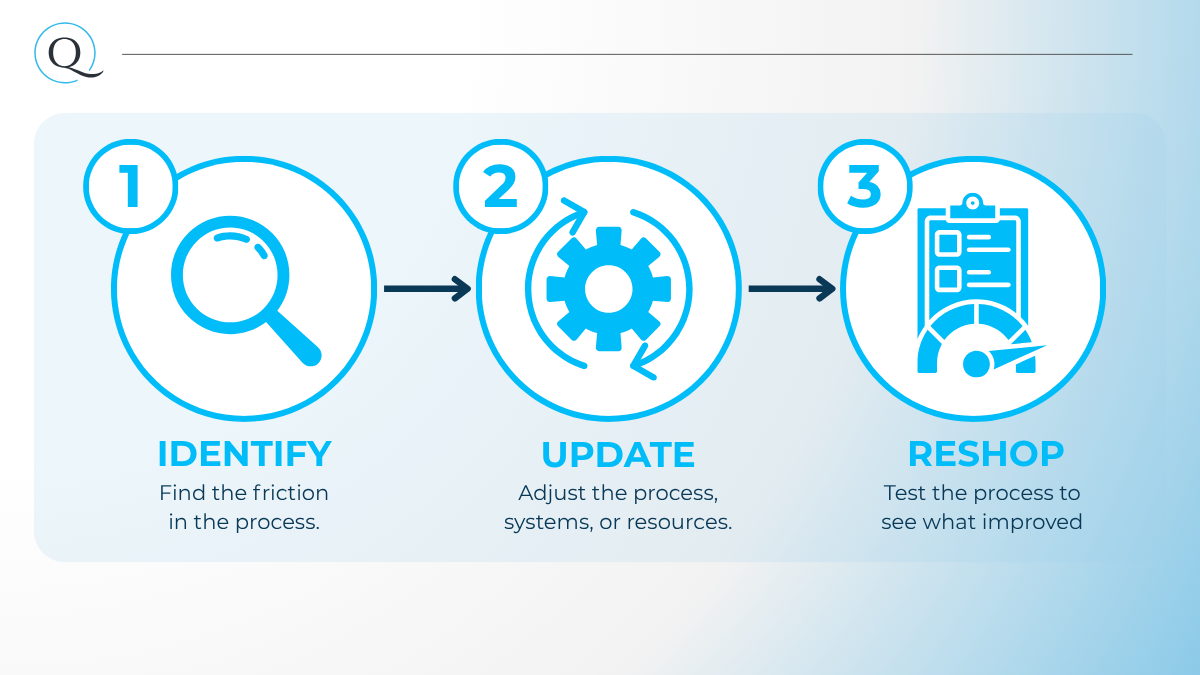
Fix the Friction, Then Shop Again
Repeated information may point to systems that don’t share data cleanly. Slow responses may expose a capacity or routing issue. Awkward explanations of next steps may mean the team needs a clearer framework or updated standard operating procedure. A dropped handoff may reveal that ownership becomes fuzzy whenever an inquiry moves from one department to another.
Some findings will require coaching. Others may require a technology change, staffing adjustment, rewritten workflow, or clearer expectations.
Once the change is made, repeat the shop under similar conditions and see whether the prospect’s experience improves. Changing the process on paper only tells you that the firm changed the process. Testing it again shows you what the change actually did.
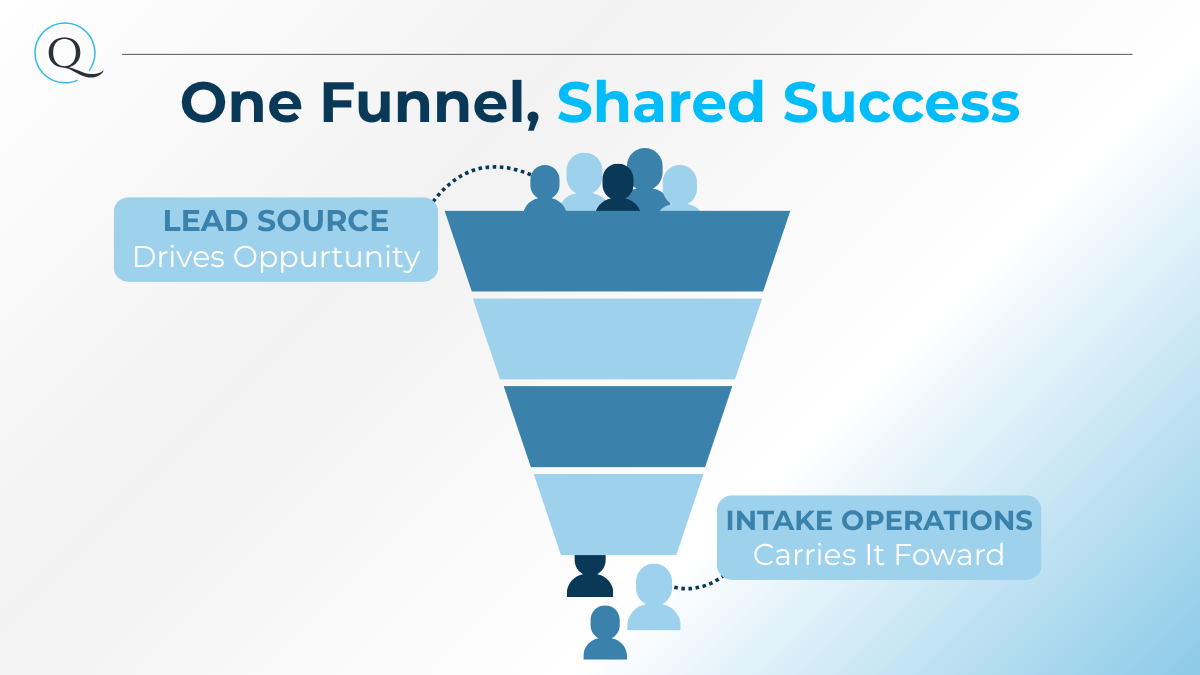
Your Lead Source and Your Intake Operation Share the Same Funnel
PI firms spend a great deal of time evaluating what comes into the top of the funnel: lead quality, source performance, qualification, cost, and ultimately the number of opportunities that become retained clients. The internal intake experience deserves the same scrutiny.
A well-qualified opportunity can still lose momentum after a slow response, confusing handoff, or inconsistent follow-up. At the same time, an efficient intake operation shouldn’t have to burn time sorting through a steady stream of poor-fit inquiries. Strong client acquisition depends on both sides of that handoff working together, which is why lead quality and intake operations have to be evaluated as part of the same system.
Quintessa helps PI firms strengthen the acquisition side of that system with qualified opportunities and signed-retainer solutions built to move prospects further down the funnel. Your firm’s intake operation carries that experience forward.
If you’re investing in growth, find out what happens after the opportunity reaches your door. Secret shop the process, compare what you learn with your data, fix the friction you find, and test it again.
Then, when you’re ready to strengthen what’s coming into that process, talk with Quintessa about putting our MVA Retainer Engine to work for you.