

Your personal injury firm is ready to grow. Fantastic! What’s the plan? Ahhh. Haven’t gotten that far yet?
Fair enough. Growth planning can get complicated in a hurry, particularly when the first instinct is to throw more money at marketing. Increase the budget. Add another acquisition channel. Expand into the next city or state. Get more prospective clients coming through the door.
Those may all be reasonable moves, and they’re traditional tactics for a reason. But before anyone starts approving budgets or shopping for new vendors, there’s a more useful conversation to have: Is the firm actually prepared to turn that additional investment into sustainable growth?
A personal injury law firm marketing strategy should consider what happens after potential clients arrive, whether the firm can serve them effectively, and how leadership will know whether the investment is paying off.
Before committing to the next stage of growth, here are the five questions you need to answer.
1. What Are We Actually Trying to Grow?
“We want more clients” sounds like a perfectly reasonable objective. It’s also a little like telling your GPS you want to “go somewhere nice.” You’re going to need to be more specific.
Easier said than done, of course. Personal injury firm growth can mean several things, and each calls for a different strategy.
- More signed clients: Increasing retained-client volume in existing practice areas.
- New markets: Expanding into additional cities, regions, or states.
- A different matter mix: Pursuing specific types of personal injury matters.
- Greater predictability: Building a steadier acquisition pipeline to support staffing and financial planning.
- Less concentration risk: Reducing dependence on a single acquisition source or market.
These objectives can overlap, but they aren’t interchangeable. Increasing motor vehicle accident clients in an established market may require better conversion or more qualified demand. Entering a neighboring state also requires evaluating competition, licensing, and the firm’s ability to serve clients there.
Define the desired outcome, establish a timeframe, and make sure the people responsible agree on what success looks like.
2. What Is Our Current Acquisition System Telling Us?
Before adding more demand, examine how the firm is handling the demand it already has.
Marketing reports can show where inquiries originate and how much they cost. A well-integrated CRM can also track qualifications, intake performance, and signed retainers. The question is whether your firm’s systems actually connect those dots, and whether anyone is using that information to make decisions.
The American Bar Association recommends connecting marketing activity to signed clients and revenue rather than evaluating success primarily through lead volume.
Start by asking:
- Which sources consistently deliver qualified prospects?
- How many inquiries become consultations and signed retainers?
- Where do otherwise viable prospects drop out?
- Which sources produce retained clients at an acceptable cost?
These answers help distinguish acquisition problems from intake or conversion problems. A campaign may generate plenty of qualified inquiries, but delayed callbacks or unscheduled consultations can undermine the investment.
Tracking the right intake metrics and understanding how operations affect lead quality can reveal where opportunities are being lost and where additional spending could deliver value.
3. Can Our Firm Absorb More Demand?
Let’s say your new personal injury marketing plan works beautifully. Qualified inquiries are up, your campaigns are performing, and the phones are ringing.
Unfortunately, your intake team is overwhelmed, your attorneys are booked solid, and follow-up depends on someone remembering to check a spreadsheet.
Congratulations. You’ve successfully marketed your way into an operational headache.
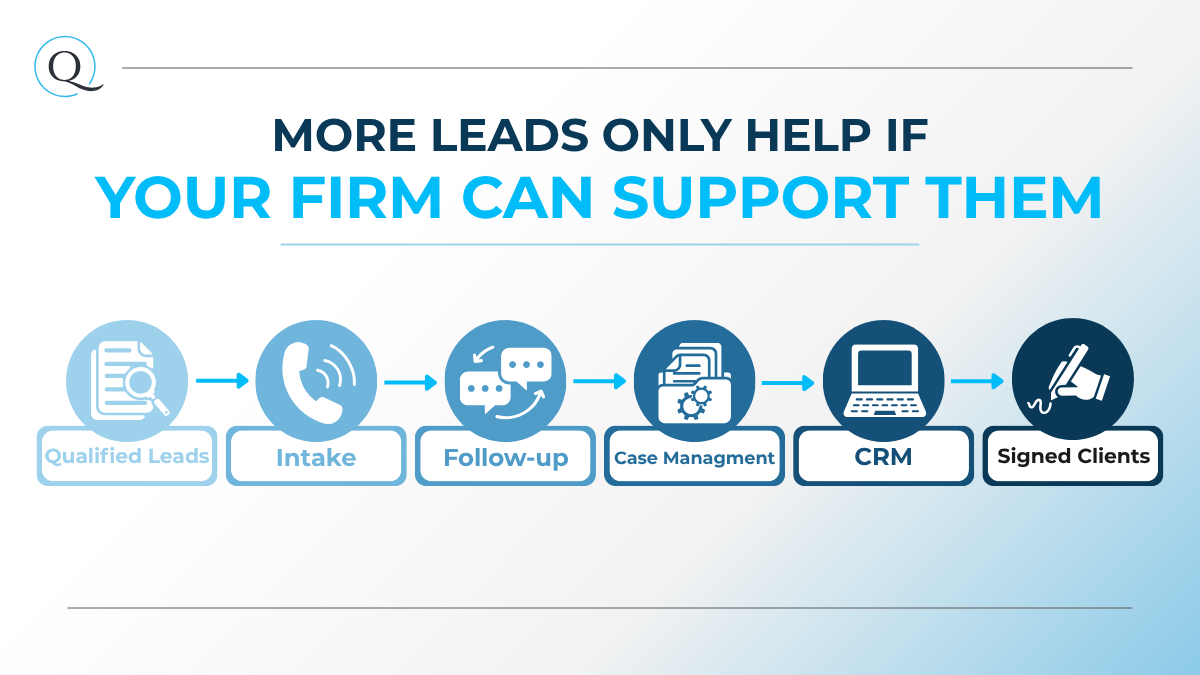
Before scaling acquisition, evaluate the firm’s capacity across the client journey:
- Intake: Can the team maintain response times as volume increases?
- Routing and follow-up: Will prospects consistently reach the right people and receive timely attention?
- Case management: Do attorneys and support staff have capacity for additional clients?
- Systems: Can scheduling, CRM, and reporting processes handle increased demand?
Small workflow problems become expensive as volume increases. That’s the hidden tax of intake chaos.
Geographic expansion adds another layer. A firm entering a new market needs appropriate legal coverage, reliable intake, and resources to support clients after they sign.
Here’s a useful exercise: Ask each department what would happen if qualified inquiry volume increased by 25% next quarter. The number is hypothetical, but the answers can expose very real constraints.
4. Do the Economics Support the Plan?
Growth costs money. Sometimes quite a lot of it. And if you’re assuming that throwing more money at marketing automatically means more revenue, your accounting department may have some questions.
Cost per lead is useful, but it doesn’t capture the full expense of acquiring a new client. A better financial assessment considers:
- Cost per qualified opportunity and signed retainer
- Conversion rates by source, matter type, and geography
- Expected fee revenue and time required to realize it
- Attrition and other factors affecting client value
- Additional staffing, technology, and operational expenses
Consider two acquisition sources. One delivers inexpensive inquiries that rarely convert. The other costs more upfront but produces a higher proportion of signed retainers. The second may offer better economics even with a higher initial price.
Signed-retainer acquisition can make costs more predictable by reducing some of the uncertainty involved in converting raw inquiries. Firms still need to evaluate client fit, retention, and expected revenue, but this approach offers greater visibility into the drivers of PI client acquisition.
A strategy that performs well in Dallas may produce different results in Houston. Thomson Reuters Institute’s Q1 2026 analysis documents regional differences in legal demand. While the findings aren’t PI-specific, they reinforce the need to model local conditions rather than assume results will transfer between markets.
Use your firm’s actual costs, conversion data, and realistic revenue assumptions to determine whether the proposed growth can support itself.
5. What Will Tell Us to Scale, Adjust, or Stop?
A growth plan needs more than a launch date and a budget. Before investing, establish measurable expectations for qualified opportunities, conversion, signed retainers, acquisition cost, and operational performance. Decide what results would justify scaling, adjusting, or pausing the initiative.
Then make sure there’s a plan for evaluating those results. That means answering a few practical questions before the campaign launches:
- Data ownership: Who is responsible for tracking and reporting performance?
- Attribution: Can marketing and intake reports be reconciled to show which sources produce signed clients?
- Review schedule: How frequently will leadership evaluate results and make adjustments?
- Revenue: How will the firm account for the time between signing a client and realizing revenue?
For geographic expansion, the firm might begin with a limited acquisition investment, evaluate early qualification and retention patterns, and increase spending only when results support it.
A disappointing initial result doesn’t necessarily mean the strategy has failed. It may reveal a qualification issue, a follow-up problem, or an assumption that needs revisiting.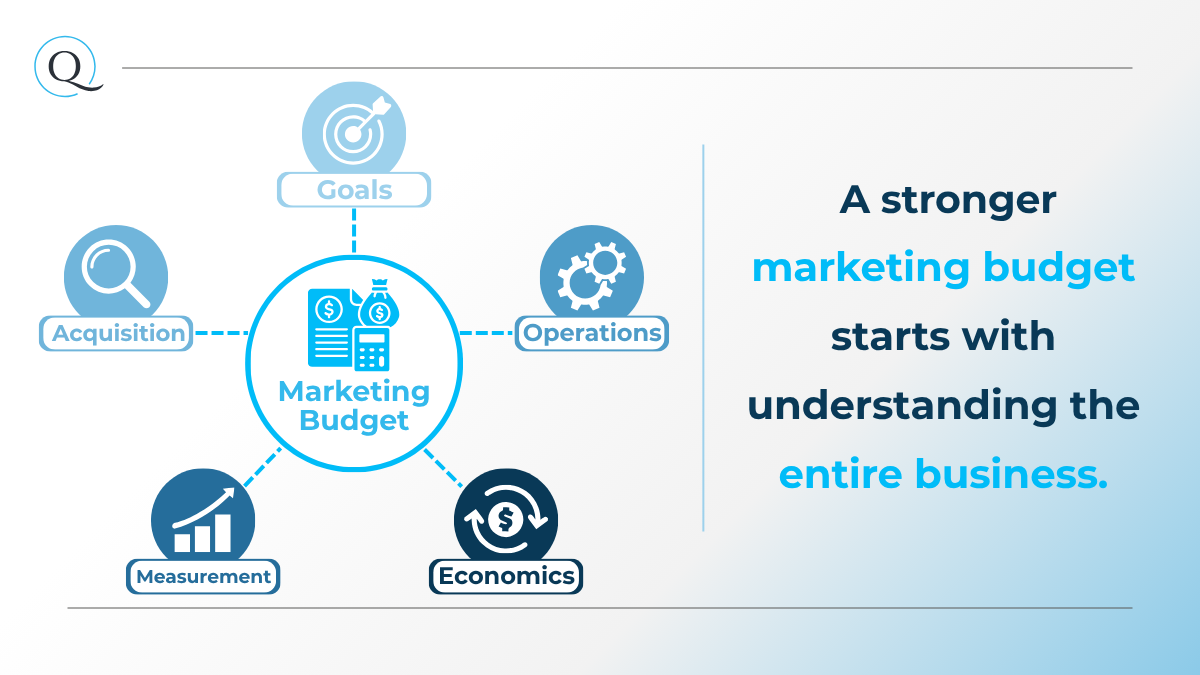
Put the Five Questions in the Room Before the Budget
A strong law firm growth strategy starts with five answers: what the firm wants to accomplish, how its current acquisition system performs, whether operations can support additional demand, whether the economics make sense, and what results will guide future decisions.
You don’t need perfect data or a crystal ball. You need enough visibility to recognize where growth is likely to work, where the firm needs to improve, and where additional spending would create unnecessary risk.
Ready to plan your firm’s next stage of growth? Connect with Quintessa about building a more predictable path to qualified, signed clients that supports your firm’s business goals.