
The leads are rolling in, cost per lead (CPL) looks solid, the CRM shows tons of activity, and your latest campaign suggests that things are moving in the right direction. So, intake should be signing more clients, right?
Right?!
Well, not necessarily.
Welcome to one of the more frustrating problems in PI lead generation: activity that looks like opportunity until somebody tries to do something with it.
Bot traffic, spam submissions, and other invalid activity can create serious problems for personal injury firms. And while some of that activity may involve wasted ad spend, the costs can continue long after a form lands in your CRM.
Before we go further, an important distinction: Not every bad lead is a bot, and not every suspicious click costs your firm money. But when questionable activity enters your acquisition pipeline, it can become an expensive distraction.
Bad Traffic Can Cost You More Than Once
Every inquiry sets a process in motion, from intake follow-up to CRM reporting and campaign measurement. When an inquiry isn’t legitimate, the costs can show up in four places.
1. Media Spend: Paying for Activity That Goes Nowhere
Bot traffic and invalid clicks are legitimate concerns for advertisers, but it’s worth understanding how platforms handle them.
According to Google Ads, invalid clicks include automated traffic, accidental clicks, and other interactions that don’t reflect genuine interest. Google uses automated systems to identify and filter invalid activity, and may issue credits when previously billed clicks are subsequently identified as invalid.
That doesn’t mean every questionable interaction will be caught immediately, or that every low-quality inquiry represents click fraud.
It does mean PI firms need to understand what they’re buying and how much of that activity produces genuine prospective clients.
2. Intake: Wasting Time Your Team Can’t Get Back
Here’s where bad leads can become particularly expensive.
Every questionable submission that reaches intake may trigger:
- Calls, texts, and emails to unreachable contacts
- Automated follow-up sequences
- Duplicate record reviews
- Lead qualification attempts
- CRM updates and cleanup
- Additional investigation into suspicious information
A few minutes spent on an unusable inquiry may not seem significant. Multiply that across dozens of submissions, however, and the costs add up while legitimate prospects wait for attention.
Intake capacity is finite, and the hidden costs of intake chaos only grow when your team spends valuable time pursuing inquiries that were never legitimate opportunities.
3. CRM Reporting: Making Bad Performance Look Good
Suppose one campaign generates 100 inquiries, but 30 turn out to be duplicates, obvious spam, or otherwise unusable.
If your reporting treats all 100 opportunities as equally legitimate, your performance picture is already distorted.
Inflated submission counts can affect:
- Reported cost per lead
- Contact and qualification rates
- Intake conversion metrics
- Comparisons between campaigns or vendors
- Marketing ROI calculations
That can make a high-volume, low-quality source look more attractive than one delivering fewer, better opportunities, potentially directing budget away from what’s working.
4. Campaign Optimization: Teaching the System the Wrong Lesson
Automated advertising platforms depend on conversion data to evaluate performance and inform optimization.
If your primary conversion event is a completed form, the platform may have limited visibility into whether that submission became a qualified opportunity or a signed client.
Google offers tools such as enhanced conversions for leads and offline conversion imports to help advertisers connect online activity with downstream outcomes.
These capabilities don’t magically eliminate bots or poor-quality traffic. They can, however, help advertisers measure performance using signals closer to actual business results.
And when your firm is investing significant money in client acquisition, better measurement matters.
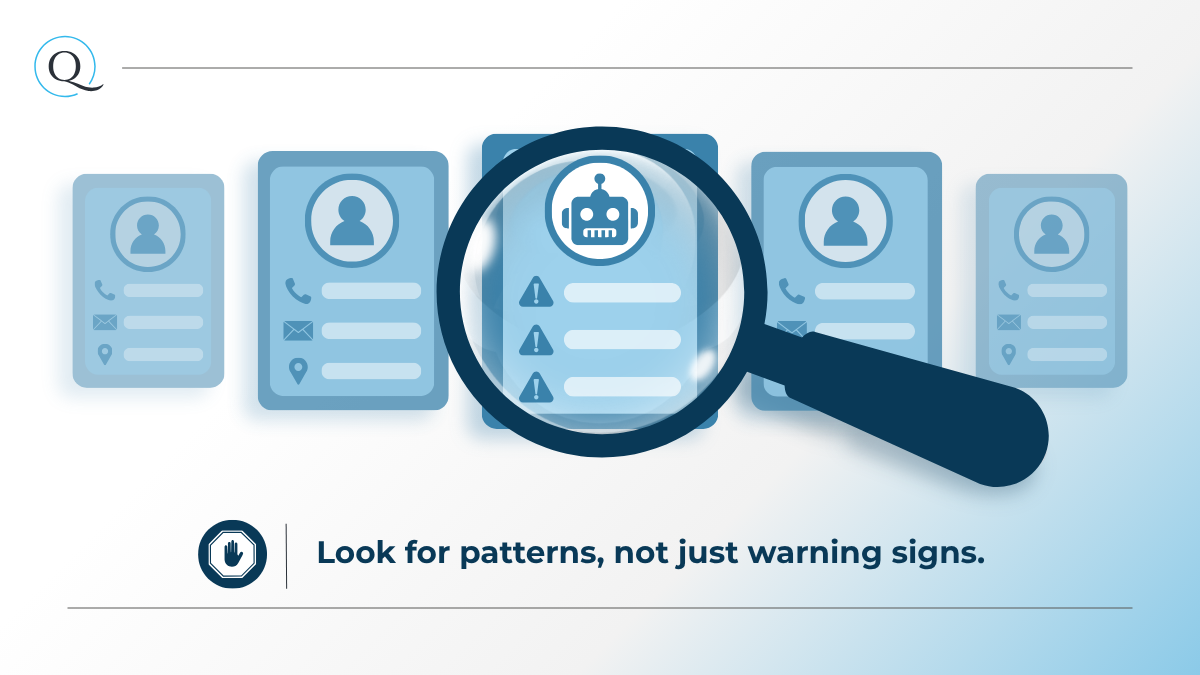
What Does a Suspicious Lead Look Like?
Bots don’t necessarily announce themselves with a name like Robot McRobotface. Sometimes the warning signs are subtler.
Common patterns worth investigating include:
- Repeated submissions: Identical or nearly identical inquiries arriving multiple times.
- Questionable information: Fabricated contact details, consistently unreachable numbers, or nonsensical form responses.
- Unusual activity spikes: A sudden burst of submissions from a particular campaign, landing page, or time period.
- Conflicting details: Inquiries that repeatedly fall outside the geography or practice area being targeted.
- Declining contact rates: A campaign generating more submissions while successful conversations sharply decrease.
None of these signs proves bot activity. Real prospects make mistakes, submit multiple inquiries, and provide incomplete information. Look for recurring patterns.
Before You Blame the Leads, Find Where the Problem Starts
A falling conversion rate doesn’t automatically indicate a bot problem. Weak targeting, slow follow-up, inconsistent intake, and poor measurement can produce similar symptoms.
Lead quality is also an operations problem. When intake processes fail to convert legitimate opportunities, the resulting performance numbers can make good leads look bad. Before blaming the source, examine three things:
- Source: Is questionable activity concentrated in a particular campaign, channel, landing page, or time period? Did it begin after a targeting change?
- Funnel: Compare form submissions, successful contacts, qualified opportunities, and signed retainers. Where does the drop-off occur?
- Intake feedback: What does your team actually encounter? Disconnected numbers, people who never requested representation, or legitimate prospects who aren’t being converted?
Those answers can help determine whether your firm has a traffic-quality problem, an intake problem, a measurement problem, or some combination of the three.
Clean Up the Signal Before You Scale the Spend
Once you understand where the problem begins, a few practical improvements can help protect your intake capacity and improve the quality of your acquisition data.
- Review form protections. Work with your marketing or technical team to ensure appropriate spam detection and form-validation measures are in place.
- Keep obvious spam out of active intake workflows. Where possible, flag or isolate questionable submissions before they trigger unnecessary follow-up.
- Standardize lead statuses. Use consistent categories such as contacted, qualified, signed, rejected/non-fit, duplicate, and spam/invalid.
- Track downstream outcomes. Connect the original lead source to actual conversations, qualified opportunities, and signed retainers.
- Review trends regularly. Investigate unusual changes in volume, contactability, qualification, or source performance rather than relying on individual anecdotes.
CRM platforms may already offer useful capabilities. For example, HubSpot documents ways to manage spam form submissions. The objective is straightforward: give your team cleaner information and a more accurate understanding of what’s working.
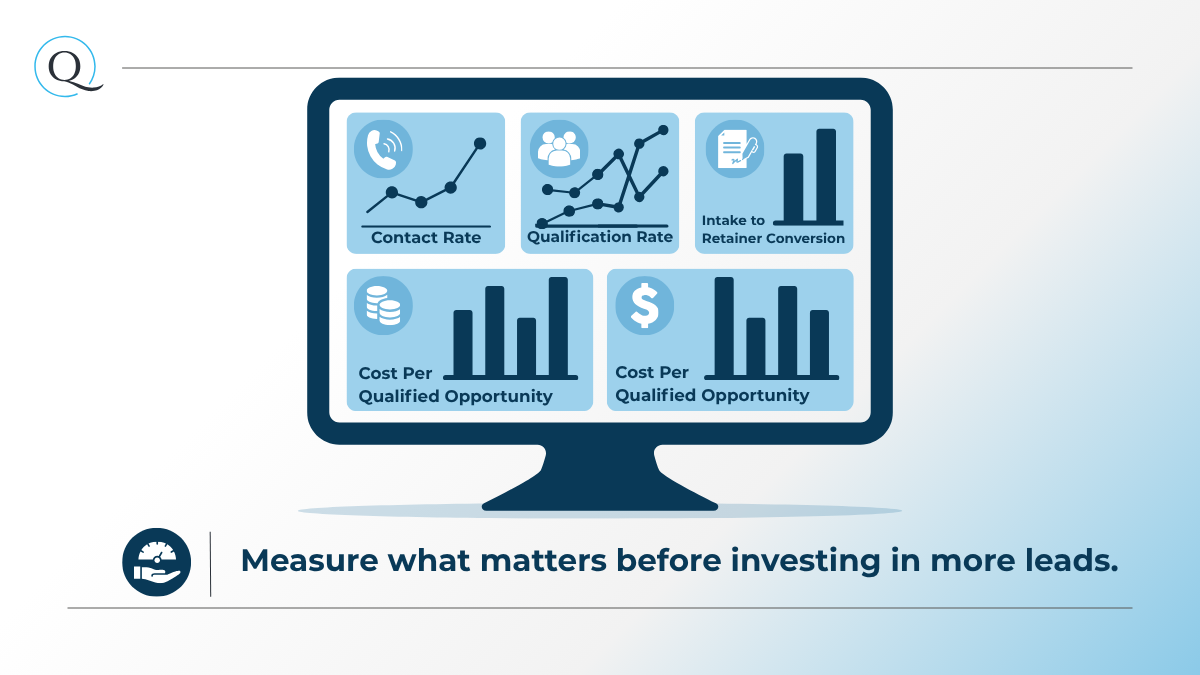
Measure What Became a Real Opportunity
Ultimately, PI marketing performance needs to be evaluated beyond clicks, form fills, and cost per lead.
Your firm should also understand:
- Contact rate: How many inquiries result in successful contact?
- Qualification rate: How many represent legitimate, suitable opportunities?
- Intake-to-retainer conversion: How effectively are qualified opportunities becoming clients?
- Cost per qualified opportunity: What does it cost to generate a lead worth pursuing?
- Cost per signed client: What are you actually spending to acquire a client?
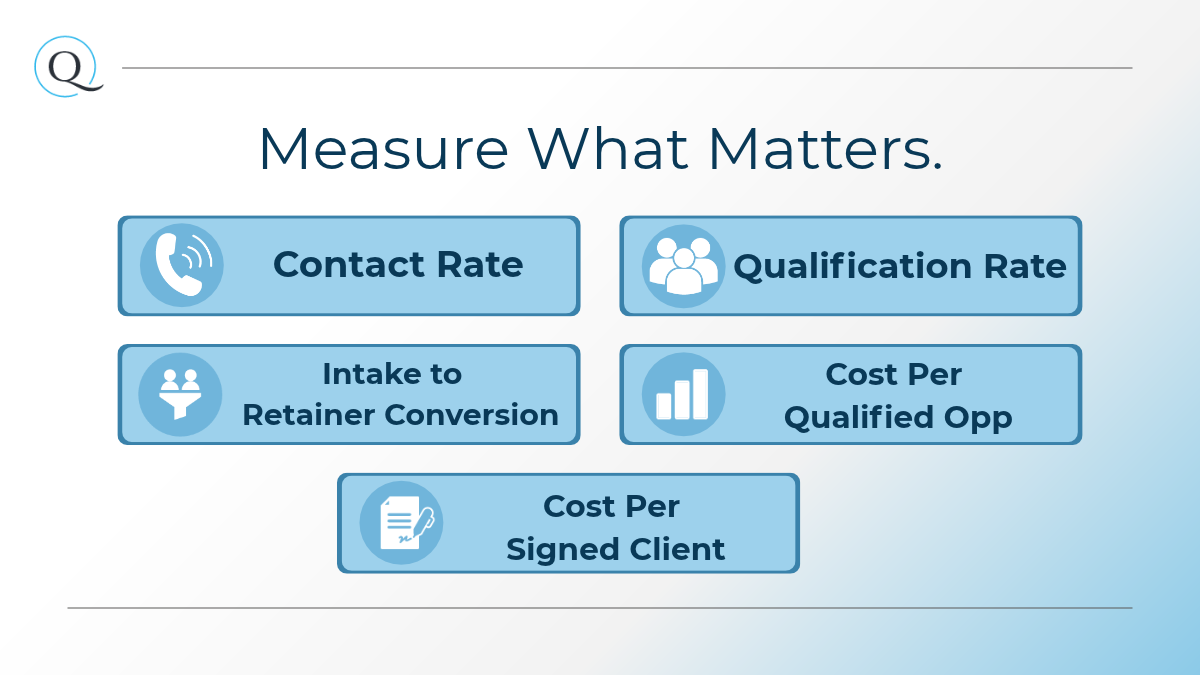
Together, these metrics help distinguish poor-quality acquisition from missed conversion opportunities. Those problems require different solutions.
Understanding which intake metrics to track before buying more leads can help your firm identify where acquisition dollars are producing results and where opportunities are slipping away.
Better Data. Better Opportunities. Smarter Growth.
A PI firm can’t grow predictably if it can’t distinguish genuine opportunities from activity that merely looks productive.
At Quintessa Marketing, we focus on connecting PI firms with qualified, signed clients through thoughtful qualification, intake support, and follow-up processes designed around meaningful outcomes. So, if you’re looking for a clearer picture of what’s happening between your lead volume and your signed retainers? Let’s talk about building a more predictable path to client acquisition.